Nepal: Where Wellness is a way of life—A New Era for Tourism Begins
Srijana Nepali

As the Government of Nepal has announced a major strategic shift toward Wellness Tourism, we are beginning to recognize that wellness has always been deeply rooted within Nepalese tourism itself. Wellness is about holistic wellbeing, mindfulness, and deeper reflection on our inner self. At a time when the world is increasingly living in chaos, stress, and uncertainty, I believe Nepal has long been offering something profoundly therapeutic—an opportunity for inner healing and self-reflection to every visitor who comes here.
This naturally raises important questions: Where is wellness in Nepal? Is Nepal truly known as a wellness destination?
These questions may prompt many perspectives, but what I firmly believe and what many of us can relate to is that wellness in Nepal is not something newly created; it is embedded in the way we live. The culture we embrace, the faith we practice, and the lifestyle we have adapted over generations—aren’t these all expressions of Nepalese wellness?
I was recently invited as a speaker to discuss the Buddhist Circuit of Nepal and how it can be connected to the broader regional Buddhist circuits of Bhutan, India, and Sri Lanka. During that session, I shared a perspective that resonated deeply with me:
Buddhism is all about wellness.
This statement surprised many of the delegates and sparked thoughtful questions. But what Nepal believes and what our spiritual heritage teaches us is exactly that. Buddhism, at its core, is about being true to oneself. It is about mindfulness, compassion, inner peace, and understanding the path toward healing—not only externally, but from within.
Perhaps this is Nepal’s greatest strength as a wellness destination: we do not need to invent wellness; we simply need to recognize, preserve, and share what has always been part of who we are.
But a Thought Comes with a Question: Is Nepal Ready for Wellness? A Journey Rooted in Spiritual and Religious Heritage
With the Government of Nepal’s announcement of the Policy and Program for Fiscal Year 2083/84, Nepal’s tourism sector is set to witness a refreshing transformation and a renewed campaign to tap into the global market.
Under Policy No. 38: Spiritual and Specialized Tourism, the Government has proposed a visionary concept to rebrand Nepal as a global hub for faith and wellness tourism. Through the “Dev Bhumi Nepal” national campaign, Nepal seeks to establish itself as a spiritual destination of global significance. Beyond this, Nepal is being positioned as a destination for religious, cultural, wellness, academic, cinematic, spiritual, and retirement tourism, with the international promotion of iconic heritage corridors such as Pashupatinath Temple, Lumbini, Janaki Mandir, and Muktinath Temple.
This visionary and timely announcement also invites a very important question: Is Nepal ready to position itself as a global wellness destination?
Since the Government of Nepal announced Nepal Wellness Year 2027, multiple dialogues, panel discussions, and related activities have created a synergistic momentum around this initiative. However, a critical thought still lingers: Can wellness tourism truly be built through the declaration of a single year?
As mentioned earlier, wellness is a way of life—and building a wellness destination takes time.
Wellness tourism is not a time-bound campaign. It cannot be created overnight through branding alone, nor can its success be determined within a limited calendar period. It is a long-term journey that requires thoughtful planning, institutional readiness, infrastructure development, and sustained commitment.
In many ways, Nepal’s wellness journey is not of today. It has existed for centuries—deeply woven into our spiritual traditions, religious practices, and cultural way of life.
The Government’s policy emphasis on spiritual and specialized tourism, including the promotion of the “Dev Bhumi Nepal” campaign and iconic pilgrimage destinations such as Pashupatinath, Lumbini, Janaki Mandir, and Muktinath, naturally aligns with the broader vision of wellness tourism. These are not simply religious landmarks; they are spaces of inner reflection, healing, mindfulness, and spiritual transformation.
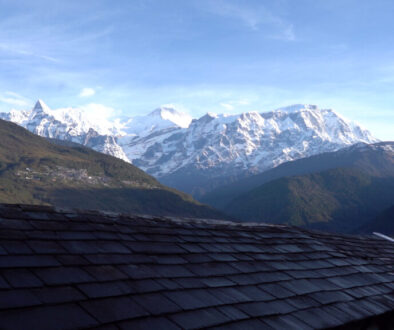
For centuries, pilgrims, seekers, monks, and travelers have come to Nepal not only to worship or explore, but to reconnect—with faith, with nature, and with themselves. Whether through Buddhist meditation traditions, Hindu spiritual practices, yoga, Ayurveda, or the quiet healing presence of the Himalayas, Nepal has long offered experiences that today’s global travelers increasingly seek under the name of wellness.
This is precisely why Nepal’s wellness identity should not be viewed as a newly invented tourism product, but rather as a rediscovery and rearticulating of what has always existed.
However, while Nepal possesses the natural and spiritual foundations, the challenge lies in transforming these timeless strengths into a well-curated, globally competitive wellness ecosystem. This requires quality wellness infrastructure, internationally recognized retreats, trained human resources, service standards, policy coherence, and a clear national narrative that defines what Nepalese wellness truly means.
The declaration of Nepal Wellness Year 2027 should therefore be seen as a starting point to reaffirm decade long practices within us creating a synergetic effect all around.
The true success of this initiative will not lie in celebrating wellness for one year, but in strategically establishing Nepal as a trusted global destination for wellness, spirituality, and transformative travel for generations to come.
Importantly, the Government has also proposed the restructuring of Nepal Tourism Board (NTB), the National Tourism Organization responsible for promoting Nepal globally, into a more innovative Public-Private Partnership (PPP) model, with the aim of making it more dynamic, responsive, and globally competitive. While NTB has already been functioning within a PPP framework, this announcement has generated significant attention and discussion across the tourism industry and among its stakeholders.
All these policies and programs appear highly promising and optimistic in reshaping the dynamics of Nepal’s tourism sector. Having worked at Nepal Tourism Board for more than eight and a half years, I see these ambitions as both exciting and demanding—requiring strong collaboration and shared commitment between NTB and the Government of Nepal to turn vision into action.
At present, with the transition in leadership and the vacancy in the CEO position following recent Government ordinances, there remains some uncertainty. While we await clarity on this important appointment, we remain hopeful that the proposed restructuring will bring positive and meaningful reform to NTB. The only organization that has been promoting Nepal in the global market should also be well-equipped to make this campaign a success.
At the same time, I sincerely hope that in any process of transformation, the Government will preserve the essence of this remarkable institution—an organization built over 28 years of dedicated effort, tirelessly promoting Nepal to the world and standing strong even during times of crisis.
History deserves celebration, contribution deserves recognition and Its legacy deserves to be honored.
We remain hopeful that the years ahead will usher in a new chapter—one that makes our Nepal Tourism Board even more dynamic, resilient, and impactful as Nepal’s voice to the world.
These policy directions signal a promising and strategic evolution for Nepal’s tourism industry—one that embraces digital innovation, wellness and spirituality, community empowerment, and destination diversification. The coming years could redefine Nepal’s position not only as a premier holiday destination, but as a place for healing, discovery, and transformative travel.
Wellness is ever present here. Now, it is time for the world to experience it.
Ms. Nepali is a senior officer in Nepal Tourism Board.