Drones Transform Everest Operations, Improving Safety and Efficiency
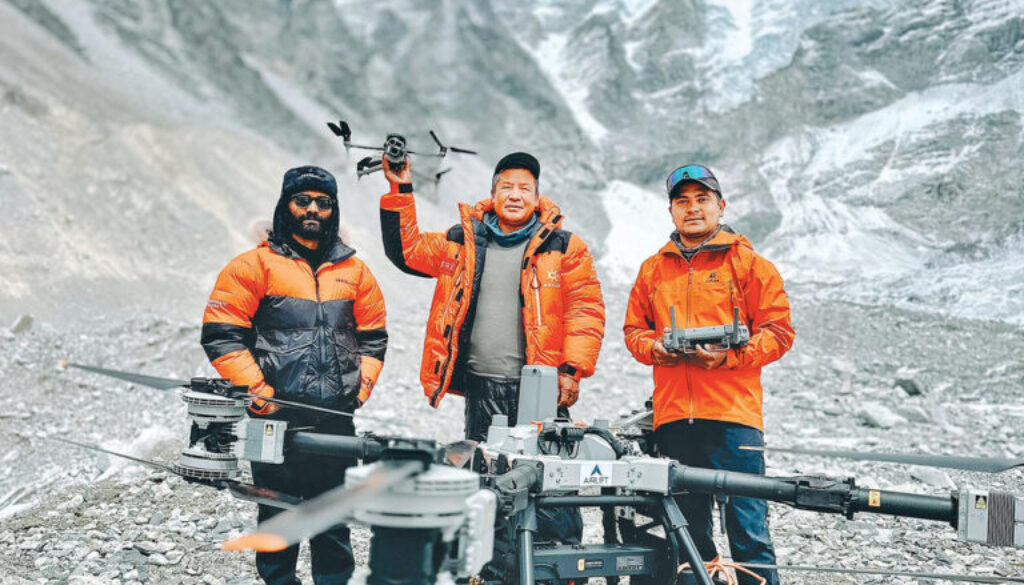
Kathmandu, June 9: The growing use of drone technology on Mount Everest has significantly improved safety and efficiency during this year’s climbing season, reducing the risks faced by Sherpa guides and high-altitude workers.
Traditionally, guides had to make repeated and dangerous trips through the Khumbu Icefall to carry oxygen cylinders, food supplies and other equipment from Everest Base Camp to higher camps. With the introduction of drones, many of these supplies can now be transported within minutes, reducing the number of hazardous journeys required.
According to guides working in the Everest region, drones have made it easier to transport heavy loads and complete tasks that previously took an entire day. The technology has helped improve expedition management while lowering the risk of accidents in one of the mountain’s most dangerous sections.
Beyond cargo transport, drones have also been used to monitor avalanches and unstable ice formations. This season, they helped track the condition of a large ice block in the Khumbu Icefall, assisting route planners in identifying safer climbing paths.
The technology has also contributed to environmental conservation efforts. Drones were used to transport waste from higher camps, including Camp 1, back to the base camp, helping reduce pollution in the Himalayan region.
Despite concerns that increased automation could affect employment opportunities for Sherpas and other mountain workers, many guides view drones as a supportive tool rather than a replacement. They note that guiding climbers, conducting rescues and managing complex operations at high altitude still require human expertise and experience.
Interest in Everest-based drone operations is also growing internationally, with several foreign drone companies reportedly exploring opportunities to test their technology in the region.
Tourism and mountaineering experts say the integration of modern technology is ushering in a new era on Everest, making climbing operations safer while preserving the vital role played by Sherpas in the mountain’s history.