Summits for a Cause: From Island Peak to Ama Dablam, and the Journey Toward K2
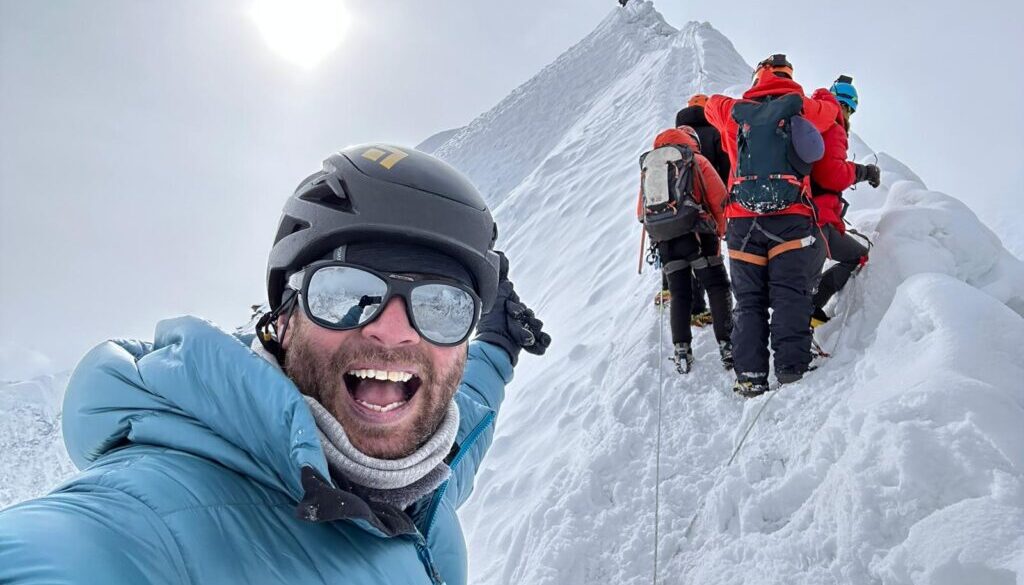
Nepal has a way of changing you. The moment you step into the Kathmandu valley; the smell of incense, the distant white tips of giants barely visible through the haze, you understand that this is not simply a destination for adventure. It is a place where the mountains demand something deeper: patience, humility, and respect. Over the last few years, my climbing journey across the Himalayas has been defined by two transformative expeditions and a clear mission; to push personal limits while raising vital funds and awareness for the Archie Foundation. From the summit of Island Peak in 2023 to conquering the iconic Ama Dablam in 2025, every step on Nepali soil has been driven by purpose, and now preparations are well underway for the ultimate challenge: K2 in 2028.
Island Peak 2023: A Foreigner’s First Steps into the Himalayan World
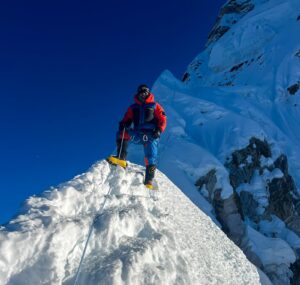
In April 2023, I landed in Nepal for the first time as a climber and the country immediately humbled me. Even the approach to Island Peak (6,189m), known locally as Imja Tse, is an education in itself. The trek through the Khumbu valley is unlike anything I had experienced: narrow stone trails weaving past ancient Sherpa villages where prayer flags snap in the thin wind, through dense rhododendron forests still bright with spring bloom, and along ridges where yaks graze at altitudes that leave lowlanders breathless. The hospitality of teahouse owners along the way, warm dal bhat served with quiet generosity, reminded me constantly that these mountains are not simply a backdrop; they are someone’s home.
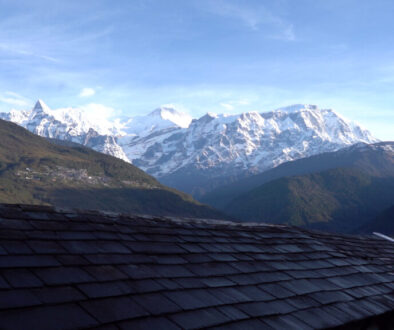
As a foreigner approaching the Himalayas for the first time, the scale is difficult to comprehend until you are standing inside it. The towering walls of Lhotse and the elegant pyramid of Ama Dablam, a peak that would come to define my next expedition, dominate the skyline in a way that no photograph can capture. The Khumbu glacier, scarred and ancient, forces a kind of silence that feels earned.
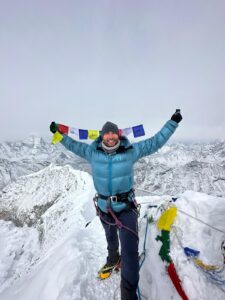
The climb itself sharpened my respect for Himalayan mountaineering further. The final stretch of Island Peak involves steep snow slopes, fixed ropes, and ladder crossings over yawning crevasses, technical terrain that, even on a so-called “trekking peak,” demands careful judgment and sound acclimatization. For a climber more accustomed to European and Scottish mountains, this was a genuine step into a different world. Standing on the summit at 6,189m, looking out across a sea of Himalayan giants, I felt the weight of where I was, and the privilege of being there. This climb raised the first substantial funds for the Archie Foundation, laying the groundwork for an even greater challenge ahead.
Ama Dablam 2025: Earning a Place on the “Matterhorn of the Himalayas”
Returning to Nepal in October 2025 felt like returning to something unfinished. Ama Dablam (6,812m) had watched over me throughout the Island Peak expedition, a constant presence, impossibly sharp against the sky and the pull to stand on it had never left.
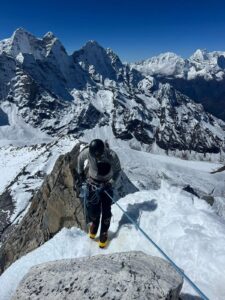
Ama Dablam translates from Tibetan as “Mother’s necklace,” a name earned by the hanging glacier that clings to its upper face like an ornament. At base camp, I was again struck by how Nepal recalibrates your sense of scale. The mountain is not merely steep; it is architectural. Its ridgelines are carved with precision, its faces alternating between ice-glazed rock and exposed mixed ground. Local Sherpa climbing guides whose familiarity with this terrain is generational, not just professional, were essential partners throughout. Their knowledge of Ama Dablam’s moods, of how the wind patterns shift across the upper ridges in post-monsoon season, was something no amount of guidebook reading could replace.
The expedition involved days of careful acclimatization, moving between camps, navigating unpredictable weather, and mastering steep ice and mixed ground. Summit day meant leaving high camp long before dawn, headtorches cutting through the darkness as we climbed steadily up fixed lines, the cold finding every gap in the layering system. When I finally stood on top, three hours ahead of schedule, the sky still fully dark, Everest and Lhotse invisible somewhere in the black, the absence of a view was strangely perfect. Nepal had offered the summit, but kept the panorama for another day. That felt right.
What mattered most was what this climb achieved together: we have now raised £52,500 for the Archie Foundation, directly supporting enhanced care at Royal Aberdeen Children’s Hospital, family accommodation, specialist equipment, and support for bereaved children and families across Scotland.
Preparing for K2 2028: The Ultimate Goal & Sponsor Opportunity
With two Himalayan summits behind me, my sights are now set on the ultimate challenge: K2 (8,611m) in 2028. The Savage Mountain. Widely regarded as the hardest and most dangerous 8,000m peak on Earth , far more technically demanding than Everest, with its steep exposed terrain, brutal weather, and extreme altitude, K2 represents the logical and terrifying culmination of everything these Nepal expeditions have built toward.
The roadmap ahead includes structured endurance and strength training, high-altitude acclimatization trips back to the Himalayas, advanced technical ice and mixed climbing courses, and full logistical preparation in partnership with top-tier operators. The charity ambition is equally bold: to set a new fundraising record for the Archie Foundation.
Every step toward K2 is a step toward the mountains that first showed me what was possible and toward helping more children and families supported by the Archie Foundation. From Island Peak to Ama Dablam, and onward to K2: adventure with purpose is what drives me, and the best is still to come.
(David Hill is a driven adventurer, offshore professional, and leadership-focused auditor with a passion for pushing limits both in the mountains and in business.)