More Than Sweets: How Makkuse is Packaging Nepal’s Heritage
For 26-year-old Samiksha Shrestha, the taste of pustakari and gundpak brings back childhood memories. She remembers visiting a local sweet shop in Nardevi with her mother and insisting on buying the traditional treats every time they passed by.
“Whenever we crossed that road, I would always ask my mother to buy me those sweets,” she recalled with a smile.
For many people in the Kathmandu Valley, gundpak and pustakari are more than just desserts, they are nostalgia wrapped in sweetness. Made mainly from khuwa, a rich milk solid prepared by slowly simmering cow or buffalo milk, these traditional delicacies have been part of Nepali households for generations.
“Gundpak and pustakari feel very personal to us,” said Shrestha. “Now that Makkuse has brought them back beautifully, I even send them as gifts to my relatives living abroad.”
In November 2020, during the uncertainty of the COVID-19 pandemic, former Miss Nepal and current lawmaker Anuska Shrestha and her partners launched Makkuse with an investment of less than Rs 3 million. The name “Makkuse,” derived from Nepal Bhasa, loosely translates to something delicious or scrumptious.
The brand was created with a vision to revive the forgotten aroma of freshly roasted khuwa that once filled the streets of old Kathmandu. Today, Makkuse has become known for reintroducing traditional Nepali desserts in a modern and premium way.
According to Mingmar Tamang, executive director of Makkuse, Nepal has long been promoted for its mountains, culture, and natural beauty, things people come to see. Through Makkuse, however, they want the world to experience the taste of Nepal as well.
“We want people to know the authentic flavors of traditional Nepali desserts,” Tamang said.
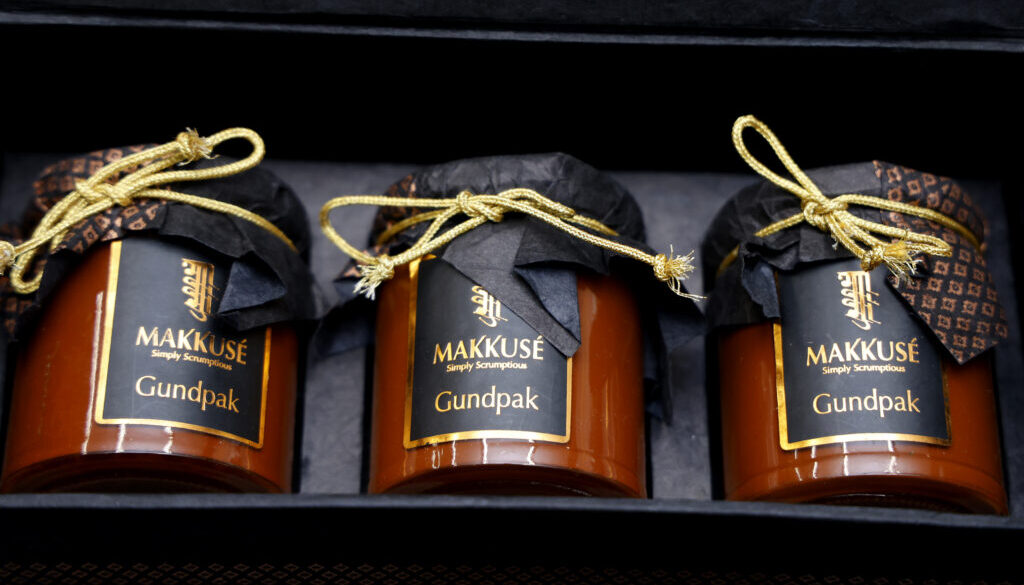
Makkuse’s signature products include gudpak, pustakari, and cookies. Their gudpak collection features Original Gudpak, Mocha Gudpak, Rosewater Gudpak, and a no-sugar-added version. The pustakari comes in original, coffee, and herbal jaggery flavors, while their cookies range from chocolate to semolina and oats varieties.
One of the brand’s most unique features is its gift box collection, where customers can mix and match different desserts into beautifully curated boxes for loved ones.
“We focus strongly on using local resources,” Tamang explained. “Even our packaging boxes are made from lokta paper, and the copper spoons are handcrafted by Nepali artisans.”
The khuwa used in Makkuse products comes from farmers in Sindhupalchok. In Mattey Gaun, local farmers carefully prepare fresh milk, which is then slow-cooked for hours over wood fire in large iron kadais to create rich and aromatic khuwa.
“It takes almost three hours every day for the khuwa to reach our factory before it becomes part of our desserts,” Tamang said.
Beyond desserts, Makkuse also supports local craftsmanship. Customers can customize gift boxes with items such as candles made by burn survivors, Dhaka caps, and pashmina shawls.
“We want to promote Nepal in every possible way while supporting local farmers and artisans,” said Tamang.
Over the years, Makkuse has grown into a luxury Nepali dessert brand with franchise stores in Jhamsikhel, Lalitpur, and Lakeside, Pokhara. Their cafés also offer creative desserts like pustakari ice cream and gudpak cheesecake, blending tradition with modern flavors.
The company currently provides direct employment to around 100 people and indirectly supports nearly 400 others.
“Nepal is incredibly rich in culture, and every ethnic community has its own food traditions,” Tamang said. “That gives Nepal huge potential to offer unique culinary experiences to the world.”
Looking ahead, Makkuse hopes to take Nepali sweets to a global audience.
“Walk through any international airport and you’ll find Swiss chocolates and Turkish delights,” Tamang said. “We want gudpak and pustakari to stand alongside them, proudly representing the taste of Nepal.”
With a country as culturally rich and culinarily diverse as Nepal, Tamang believes the opportunity is immense. “Every ethnic group has its own food traditions. Nepal is a virgin, largely unexplored destination for food lovers worldwide. We’ve only just begun.”