The Woman Who Saw Gold in Garbage
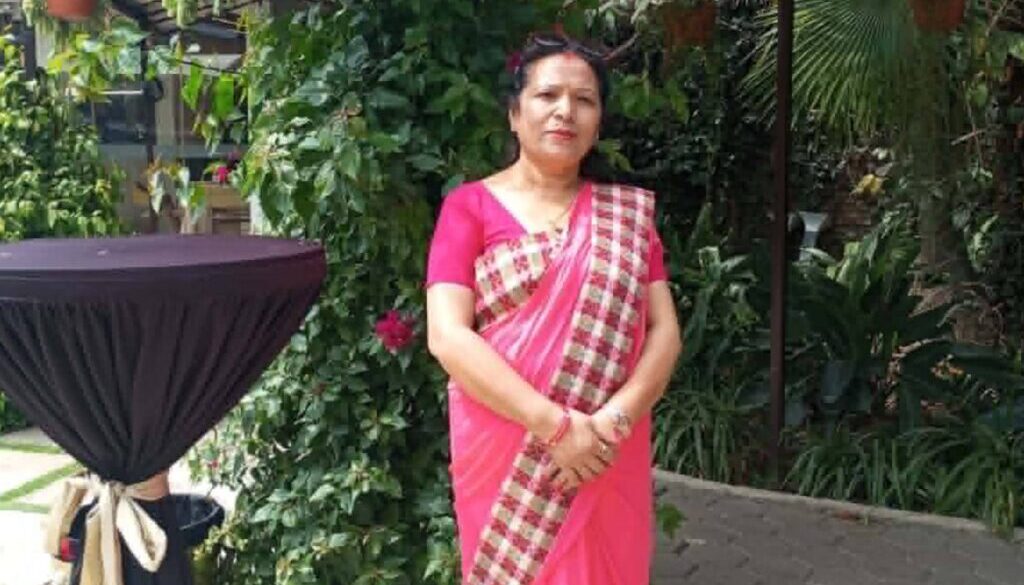
Somewhere on a street in Kathmandu right now, someone is walking past a plastic bottle. Sarita Bajracharya would pick it up and make something beautiful out of it.
A plastic bottle. A torn milk wrapper. To most of us, these are things to ignore or throw away. To Sarita, they were always something else: a material, a possibility, a product waiting to happen. She’d collect them off the street, tuck them into her bag, and bring them home. Not out of habit. Out of vision.
That vision has now trained over 5,000people, reached buyers across four continents, and earned her a global award in Paris. It all started with a sewing machine and a street full of litter.
Sarita was 21 when she learned tailoring at Gita Tailoring in 2047 BS. Her routine was simple: college in the morning, sewing in the evenings. She was good at it, and soon she was teaching other women, particularly single women who needed a skill to stand on. But something always tugged at her. The streets were cluttered with plastic. Bottles clogged the drains, water pooled, mosquitoes multiplied. She couldn’t just look away. She’d reach in and pull the bottles out herself. What bothered her more, though, was the question she couldn’t yet answer, what do you actually do with all of this?
The answer came quietly, a one-day workshop on plastic recycling held near her home. It wasn’t long, but it was enough to light a spark. If people could weave things from wool, why not try the same with plastic? She began experimenting at home. Then in 2061 BS, she was invited as a trainer to an 18-day program in Barabisey, run by the Department of Cottage and Small Industries. She went to teach but came back transformed. Participants there were turning grass into baskets, cushions, and mats. Sarita watched closely and thought plastic could do exactly this.
When she returned home, she made a quiet but firm decision. Her tailoring institute, Sagun Silai Talim Kendra, would become something entirely new: Neha Udhyog, a space dedicated to recycling, craft, and possibility.
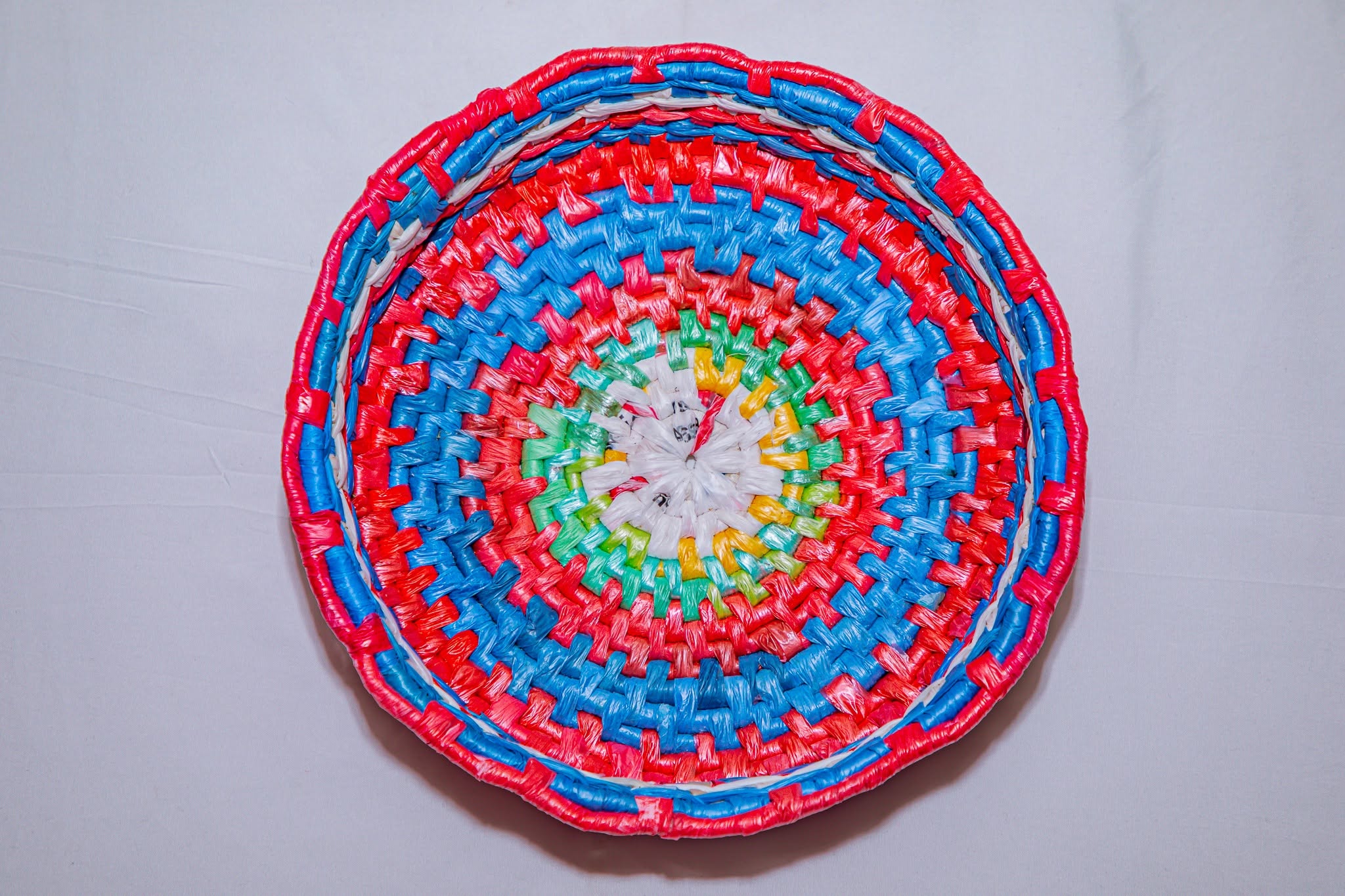
Nothing goes to waste there. Plastic bottles become doormats, keyrings, and tea coasters. Milk wrappers are woven into baskets and floor mats. Old jeans are stitched into bags and purses. Every piece is handmade. Every piece began as something someone else threw away. And these products have found buyers well beyond Nepal, in the Philippines, Germany, the United States, and Australia. “Earlier, people used to ask why anyone would buy something made from trash,” Sarita says with a smile. “Later, those same people started bringing me their bottles and milk bags, saying it would be useful for me.”
But the real measure of Neha Udhyog isn’t in its exports. It’s in the people it has quietly changed. Bimala Dhuku came from Bhaktapur with very little hope. Her husband was alcoholic and abusive, and she was looking for any work she could find, even dishwashing. She walked into Sarita’s institute asking to learn something, anything, that could help her earn. Sarita taught her for free. Bimala turned out to be a natural. She became Sarita’s assistant, traveled with her to training programs across the country, and eventually rose to become a head trainer herself. Today her children are in school, her income is steady, and her husband gradually. remarkably, has changed too. He now helps support the family. “There have been women who walked in with nothing but the need to earn something,” Sarita says quietly. “That’s enough reason to teach.”
Over the years, she has trained more than 5,000 people through municipal programs, self-funded visits, and open workshops that have drawn participants from Korea, America, Germany, and the Philippines. In 2015, she was nominated by Manushi for the Positive Planet Award, one of just seven nominees chosen from hundreds of candidates across 60 countries. She accepted the award in Paris on December 7th that year, in recognition of her entrepreneurial courage and commitment to a cleaner world. She has also received the Udhyami Puraskar from the Department of Cottage and Small Industries, and recognition from the Nepal Academy of Fine Arts.
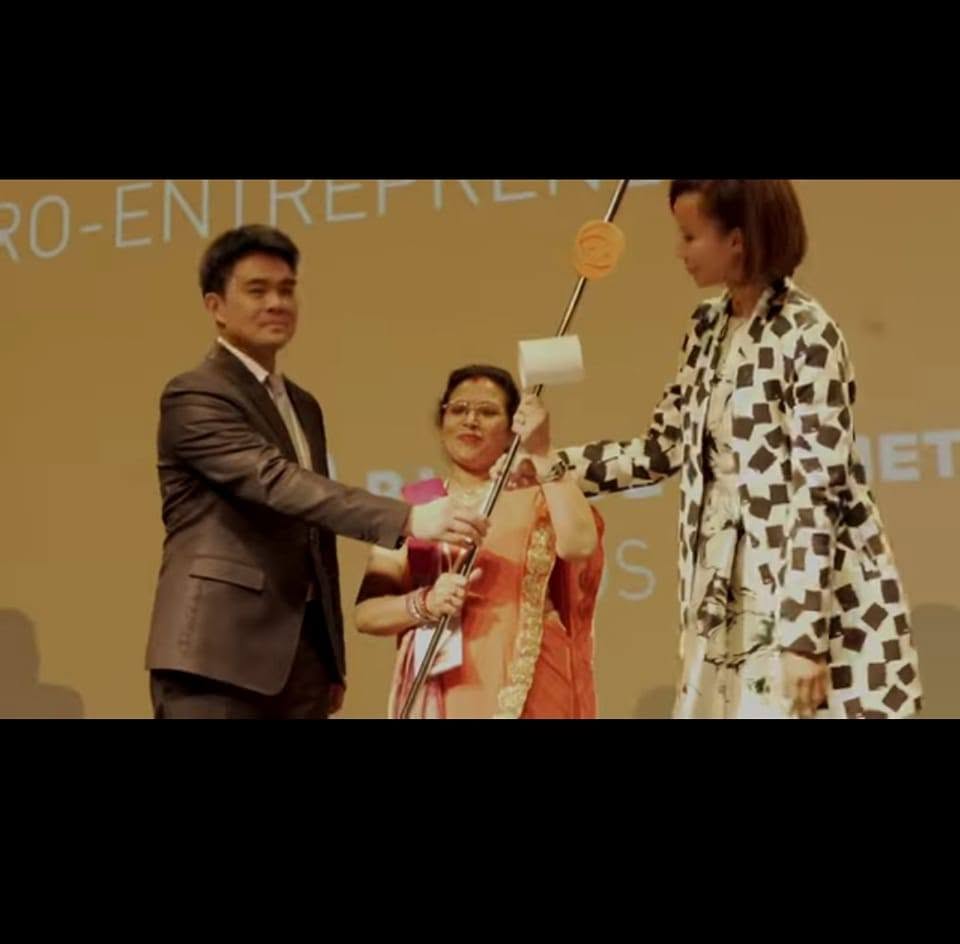
Ask Sarita about the hard years: the doubt, the slow climb, the moments of frustration and she gives you nothing to feel sorry about. “I don’t see them as difficulties. They are lessons. They are the effort 1 put in to do better.” Her dream now is a bigger Neha Udhyog, one that recycles more, employs more, and teaches more. And she’s firm about who belongs in that picture. “I want both men and women to learn these skills and become financially independent. This work shouldn’t be divided by gender. Men should learn what is called women’s work, and women should feel free to be breadwinners too.”