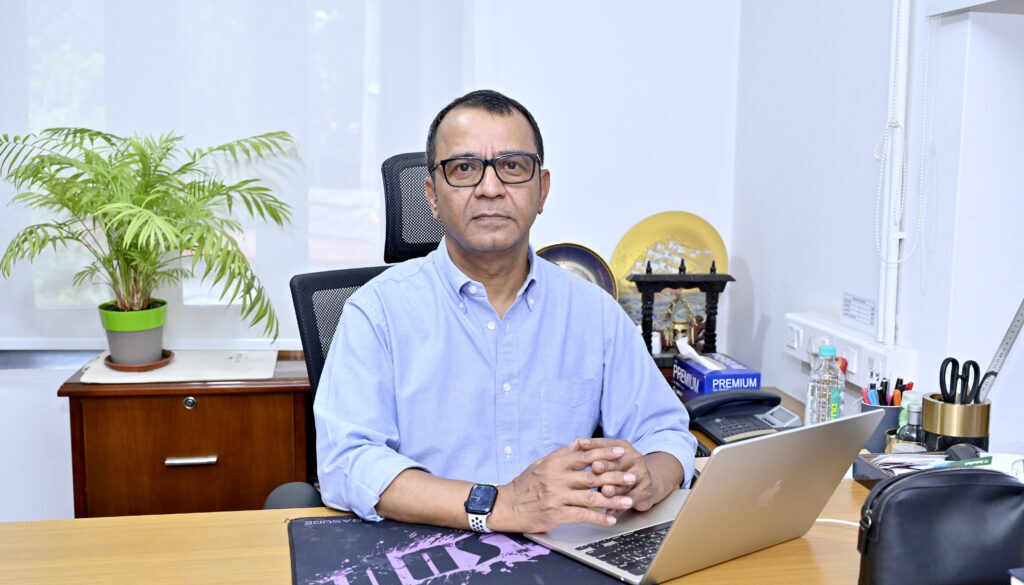
‘Tourism Alone Can Transform Nepal, If We Get the Basics Right’ – Ramesh Hamal, Managing Director, Dusit Thani Himalayan Resort
– Interview –
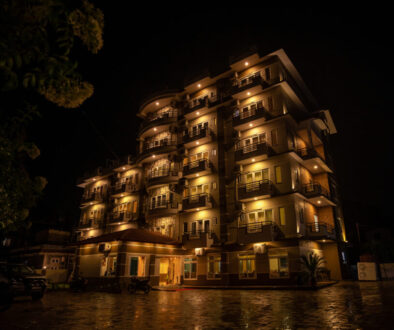
As Nepal looks to unlock the full potential of its tourism sector, Ramesh Hamal believes the country must shift its focus from low-value mass tourism to high-value, sustainable tourism. An entrepreneur and tourism investor with more than 30 years of international experience, Hamal is the founding partner of Omstone Asia, the developer and operator of the five-star Dusit Thani Himalayan Resort in Namo Buddha.
An electrical engineer by training with an MBA in International Business Management and Finance from the Asian Institute of Technology, Thailand, Kumar has worked across tourism, real estate, and investment consulting in global markets. In this conversation with Sajira Shrestha, sub-editor of Tourism Face Magazine, he shares his views on Nepal’s tourism potential, investment climate, infrastructure challenges, and the reforms needed to position Nepal as a world-class destination.
Nepal has traditionally viewed tourism as a service sector. Should we start viewing it as a strategic economic industry capable of driving national development?
Absolutely. In my view, tourism is one of the few sectors that Nepal can strategically prioritize across its entire ecosystem. If developed properly, tourism alone has the potential to significantly drive the country’s economic growth. We have seen many countries successfully transform their economies by placing tourism at the center of their development strategy.
Nepal is naturally blessed with extraordinary tourism assets: our mountains, culture, heritage, spirituality, biodiversity, and hospitality. However, the challenge is that our tourism ecosystem has not yet been able to function as a cohesive whole. We need to make the entire ecosystem more dynamic and investment-friendly so that tourism can reach its full potential.
At the same time, we must strengthen the fundamentals of tourism, particularly infrastructure and visitor amenities. The tourist experience begins the moment a traveler arrives at the airport. Long waiting times, flight delays, and high airfares can negatively affect that experience. This is especially important because India remains our largest source market for tourists.
Today, for many Indian travelers, it is often cheaper to visit destinations such as Thailand or Vietnam than Nepal. One of the reasons is limited direct air connectivity from several Indian cities. When travelers are forced to take connecting flights, both the cost and travel time increase significantly.
In a nutshell, Nepal needs to focus on strengthening its tourism ecosystem and improving infrastructure. These are not changes that can happen overnight; they require sustained effort and long-term commitment. But the most important starting point is having a clear vision and the right mindset about the role tourism can play in Nepal’s future.
From an investor’s perspective, what is the untapped economic potential of Nepal’s tourism sector?
Tourism in Nepal remains largely untapped. We should not be satisfied with attracting just 1 to 1.2 million visitors annually. Countries like Sri Lanka, which is much smaller than Nepal, welcome nearly three million tourists each year, while destinations such as Thailand attract tens of millions. This shows the scale of opportunity that still exists for Nepal.
If Nepal could increase tourist arrivals from one million to three million, the impact on the economy would be transformative. Tourism is one of the most effective job creators in the country. In Nepal, roughly one job is created for every six tourist arrivals, making tourism a powerful tool for employment generation, income growth, and foreign currency earnings.
The challenge is not a lack of potential but a lack of vision and supportive policies. In my view, Nepal has not even realized 20 percent of its tourism potential. Despite being a sector that benefits communities across the country, tourism businesses continue to face high operating costs, expensive electricity tariffs, regulatory hurdles, and barriers to attracting international investment and global hotel brands.
Tourism is essentially an export industry without the need to export goods. Foreign visitors bring revenue directly into the country, making it especially valuable for a landlocked nation like Nepal. Yet we have not prioritized the sector accordingly. Countries such as Thailand and Singapore actively encourage tourism through policies like VAT refund schemes for visitors, recognizing the broader economic benefits that tourism generates.
To unlock tourism’s full potential, Nepal needs a long-term vision, investment-friendly policies, better infrastructure, and a mindset that treats tourism as a strategic national industry rather than a peripheral sector. If we do that, tourism can become one of the strongest drivers of economic growth, employment, and social development in Nepal.
How can Nepal move from attracting more tourists to attracting higher-spending tourists?
First and foremost, Nepal must strengthen its basic infrastructure. In today’s world, whether it is tourism, trade, investment, or economic growth, success depends on trust, convenience, and confidence. Investors and tourists are naturally drawn to destinations that offer reliable infrastructure, seamless services, and a sense of security. Without addressing these fundamentals, it will be difficult for Nepal to reach its tourism potential.
At present, Nepal has largely focused on low-value tourism. The average daily spending of a tourist in Nepal remains relatively low by international standards. To increase tourism’s contribution to the economy, we need to shift our focus toward high-value tourism by improving infrastructure, enhancing visitor amenities, and better showcasing our unique natural, cultural, and spiritual heritage.
One of the most promising opportunities lies in wellness tourism, which is currently among the fastest-growing segments of the global tourism industry. Nepal has a natural advantage in this sector through Ayurveda, yoga, traditional healing practices, medicinal herbs, spirituality, and meditation. However, these strengths need to be packaged, promoted, and presented authentically to international visitors.
For this, government support is essential. The state must create an enabling policy environment, encourage investment, and help build an ecosystem that allows wellness tourism and other high-value tourism products to flourish.
Moving toward high-value tourism is not just an economic necessity; it is also a sustainable approach. If we continue to rely on low-spending mass tourism, our infrastructure and environment will face increasing pressure while generating limited returns. High-value tourism allows Nepal to earn more, create quality jobs, and preserve its natural and cultural assets more effectively.
Having worked in both international markets and Nepal, how attractive is Nepal today as a tourism investment destination?
This is a challenging issue. Having worked in countries such as Sri Lanka and across Southeast Asia, I have seen how international hotel chains and tourism investors have been encouraged to invest through clear policies and efficient systems. Sri Lanka, India, and the Maldives have been attracting major global tourism brands for decades. Nepal, however, has struggled to do the same.
The primary reason is not a lack of potential but the regulatory and administrative environment we have created. Our foreign investment approval process is cumbersome, time-consuming, and often unpredictable. As a result, Nepal has not been able to attract large-scale, institutional investors, not only in tourism but across many sectors.
The challenge is compounded by weak infrastructure, high construction and operating costs, lengthy approval processes, and project delays. When investors compare Nepal with competing destinations, these factors significantly reduce our attractiveness.
Globally, many countries have streamlined investment procedures, with approvals often completed within days through automatic or single-window systems. In Nepal, however, investors still have to navigate multiple layers of approvals and bureaucracy.
As a nation, we need to ask ourselves a simple question: if we genuinely want foreign investment, why are we making the process so difficult? Creating an investment-friendly environment requires not only policy reforms but also a clear national commitment to welcoming and facilitating investment.
What concerns do foreign investors commonly raise when considering tourism projects in Nepal?
Investors around the world essentially look for three things. First, how easy is it to do business in a particular country? Second, is their investment safe and protected? And third, can they repatriate their profits and capital without unnecessary obstacles?
An investor’s decision ultimately depends on whether the country offers a reliable ecosystem, policy stability, and a clear path to earning and realizing returns on investment. Unfortunately, Nepal has not been able to inspire confidence in these areas consistently, which is one of the reasons Foreign Direct Investment (FDI) remains below its potential.
I have been involved in FDI promotion in Nepal for many years, and one of the strongest indicators of a healthy investment climate is repeat investment. When an investor chooses to invest again, it signals trust in the country’s business environment. However, Nepal has struggled to attract significant reinvestment from existing investors.
Potential investors closely study the experiences of those already operating in the country. They ask a simple question: Are current investors satisfied, and are they expanding their investments? The answers to those questions serve as a powerful validation of a country’s investment environment. If existing investors are not reinvesting, attracting new investors becomes much more difficult.
What policy reforms are necessary to attract large-scale investments in resorts, wellness centers, and hospitality infrastructure?
First, we must understand that investment is not only about foreign direct investment; domestic investment is equally important. The conditions required for both are largely the same: policy stability, predictable taxation, efficient approvals, and minimal bureaucratic hurdles. Investors, whether domestic or foreign, need confidence that rules will remain consistent and that projects can move forward without unnecessary delays.
One of Nepal’s major challenges is the difficulty of implementing projects outside major urban centers. Local-level obstacles, administrative uncertainties, and procedural delays often make investment in many parts of the country extremely challenging. This creates a perception that Nepal is not yet fully prepared to facilitate large-scale investment efficiently, which is unfortunate because the country has enormous potential.
We need to fundamentally reform our investment approval system. In many countries, foreign investment approvals are processed within days through streamlined procedures. In Nepal, investors often have to navigate multiple layers of approvals despite bringing funds through formal banking channels. If we genuinely want investment, we must simplify the process and focus on transparency and accountability rather than excessive bureaucracy.
Infrastructure is another critical issue. Tourism and investment cannot thrive without reliable roads, transport networks, and public services. Too often, infrastructure projects in Nepal take years to complete, causing inconvenience to local communities, increasing costs, and reducing the country’s attractiveness as an investment destination. Delays that would be unacceptable elsewhere have become normalized here.
More importantly, Nepal still lacks comprehensive tourism master planning. We have not fully integrated tourism development with environmental conservation, cultural preservation, infrastructure planning, and investment strategy. While some ecological damage has already occurred, there is still an opportunity to protect what makes Nepal unique and build a sustainable tourism model for the future.
I remain optimistic. Nepal has tremendous potential, and a new generation of policymakers is emerging. If we can adopt a more holistic approach to tourism, infrastructure, and investment, and create an ecosystem built on efficiency, sustainability, and long-term vision, Nepal can become a far more attractive destination for both investors and visitors.
What inspired the decision to bring the Dusit Thani brand to Nepal? Why was Nepal chosen as a destination for a luxury resort under the Dusit Thani banner?
For me, this was never just a financial investment, it was an emotional investment. I am a son of Nepal, and my journey abroad began in 1997. At the time, many young Nepalis left because opportunities for growth and merit-based advancement were limited. I went abroad on a scholarship, later worked with the United Nations, and from 2000 onwards built a global career in tourism, real estate, and investment consulting.
Living and working internationally gave me a different perspective. The more I saw the world, the more I reflected on Nepal’s untapped potential. After establishing my career abroad, I increasingly felt a desire to reconnect with my roots and contribute something meaningful to my country. Around 2016, I decided to return to Nepal with a vision of creating something transformative.
Through my research, I realized that Nepal had largely focused on low-value tourism. I believed the country had the potential to become a high-value tourism destination, one that generates greater economic returns while placing less pressure on infrastructure, communities, and the environment. That belief became the foundation of our project.
When we identified the site at Namo Buddha, I began discussions with international investors. Convincing them was not easy. Many questioned whether Nepal was ready for a luxury tourism product. Building a world-class hospitality project with an international brand requires significant investment, strict safety standards, advanced engineering, high service quality, and global operational benchmarks.
After considerable effort, we were able to convince investors and eventually partner with an international brand. We wanted to create something different, not simply another hotel, but a project that could set new standards for Nepal’s hospitality industry. Today, I am proud that the project has become a reference point for many new hotel developments in terms of design and quality.
At a personal level, this journey was also about transformation. For most of my professional life, I worked as a senior executive leading organizations around the world. Returning to Nepal gave me the opportunity to take a different path, to move from being a manager to becoming a creator, from building businesses for others to building something of my own. This is my first entrepreneurial venture, and in many ways, it is both a professional challenge and a deeply personal commitment to Nepal’s future.
Through Dusit Thani Himalayan Resort, you are targeting a premium segment of travelers. Is Nepal ready for luxury tourism?
Every country has different consumer segments, and Nepal is no exception. Even today, there are many Nepalis who purchase premium products, drive luxury vehicles, and travel extensively around the world. So, while luxury hospitality projects are primarily designed to attract international visitors, there is also a domestic market that values and can afford high-end experiences.
Our target market is therefore a combination of international, domestic, and regional travelers. International tourists remain a key focus, but we also recognize the growing demand among affluent Nepalis for world-class hospitality within the country.
At the regional level, India represents a particularly important market. India’s rapid economic growth and rising wealth have created a large and increasingly mobile population of travelers. This trend is having a significant impact not only on Nepal’s tourism industry but on global tourism as a whole. Today, countries around the world are actively competing to attract Indian tourists because of their growing spending power and travel preferences.
For Nepal, this presents a major opportunity. With the right products, infrastructure, and connectivity, we can attract a larger share of this growing regional market while also strengthening our appeal to international and domestic travelers.
Can Nepal realistically compete with destinations such as Thailand, Bhutan, and the Maldives in the premium tourism segment?
Countries such as Thailand have spent decades building their tourism ecosystems, infrastructure, and global reputation. Nepal cannot compete with them by simply trying to replicate what they have already perfected. Instead, we need to compete on our own strengths and create a unique position in the global tourism market.
Fortunately, Nepal has distinct advantages. Our spiritual heritage, natural environment, biodiversity, culture, and mountain landscapes offer experiences that few destinations in the world can match. The key is to build tourism products around these unique assets rather than trying to imitate other countries.
In my view, Nepal’s challenge is not the lack of a compelling tourism offering. The real challenge is the ecosystem that supports it. We have the product, but we have not yet developed the infrastructure, connectivity, policy environment, and investment climate needed to fully realize its potential.
Thailand’s success is not simply the result of beautiful destinations; it is the result of decades of investment in infrastructure and an environment that makes it easy for tourism entrepreneurs and investors to operate. Nepal still lags behind in these areas, which limits our ability to compete effectively.
If we can strengthen our infrastructure and create a more supportive ecosystem, Nepal can carve out its own niche in the global tourism industry rather than competing on someone else’s terms.
Looking ahead to 2035, what type of tourism destination do you envision Nepal becoming? Which emerging global tourism trends should Nepal be preparing for today?
Nepal’s challenges are unique, but so are its opportunities. We are blessed with extraordinary natural, cultural, and spiritual assets. However, before we aspire to compete at the highest global level, we must first get the basics right.
There is a saying that knowledge without wisdom can be dangerous. Wisdom tells us to focus on fundamentals. We need to strengthen the foundations of our economy by improving customs procedures, streamlining investment approvals, reforming environmental clearance processes, and creating a more efficient regulatory environment.
Today, even obtaining necessary approvals for a project can take years. In some cases, projects lose momentum before they even begin. This not only discourages investment in tourism but affects every sector of the economy.
The world is moving at an unprecedented pace. Technologies such as artificial intelligence are transforming industries, economies, and societies. Many countries are already focused on how to leverage these changes to accelerate growth and prosperity. Nepal’s immediate challenge, however, is more fundamental. Before we can compete in the next phase of global innovation, we must build the systems, infrastructure, and institutions that allow us to compete effectively in the first place.
Our priority should be clear: fix the basics, create an enabling environment for investment and enterprise, and build a strong foundation for long-term growth. Once we do that, the opportunities available to Nepal are immense.
You have worked in international business, financial regulation, and hospitality. If you had the opportunity to redesign Nepal’s tourism strategy from scratch, what would be your first three priorities, and where do you see Nepal’s place in the global tourism economy twenty years from now?
If I had been a policymaker, I would have focused less on building numerous airports and more on creating a coherent national infrastructure strategy. Nepal is a young and geologically fragile mountain country, yet much of our development has been carried out in an ad hoc manner without sufficient long-term planning.
Our greatest asset is not infrastructure alone, it is our ecology, climate, culture, and natural beauty. In an era of climate change, Nepal has a unique opportunity to position itself as a premier high-value tourism destination. But to do that, we must protect the very assets that make us special.
Rather than building dozens of underutilized airports, I would have prioritized a few world-class international gateways supported by reliable east-west and north-south highways, feeder roads, and ropeway connectivity. Such an approach would have improved accessibility while minimizing environmental damage and preserving Nepal’s ecological advantages.
The foundation of any tourism strategy should be ecology. Nepal’s climate, biodiversity, spirituality, and cultural heritage are assets that cannot easily be replicated elsewhere. If we build infrastructure that complements and protects these strengths, investment will naturally follow. Investment, like water, flows where conditions are favorable.
What Nepal needs most is long-term planning, quality infrastructure, skilled human resources, and an enabling environment for investment. If we can build those foundations, I am convinced Nepal can emerge as one of the world’s most attractive high-value tourism destinations. There are no shortcuts or miracles in development: only good policies, careful planning, and consistent execution.