Nepal Trains First Group of Deaf Trekking Guides
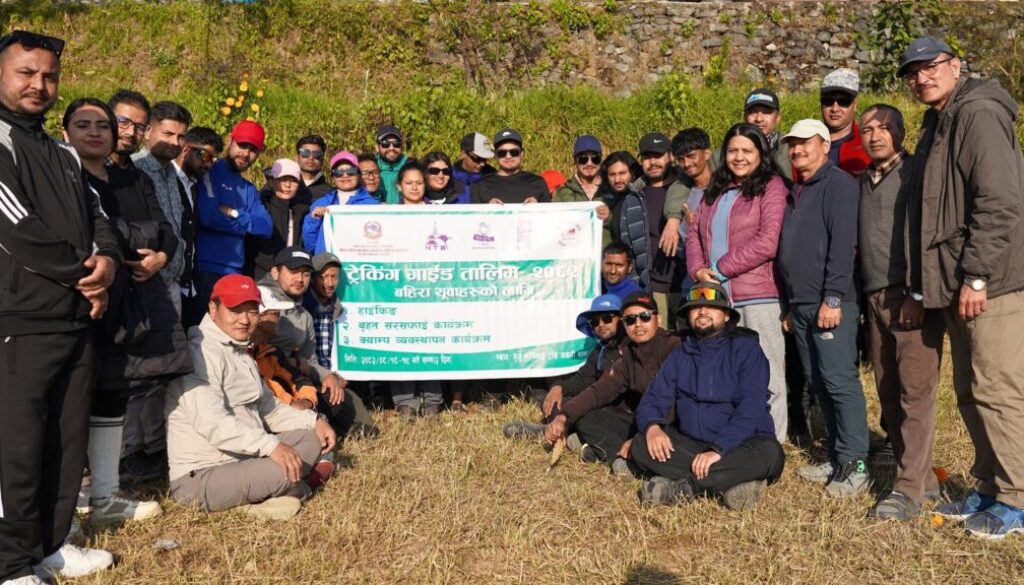
Photo: UNDP
Kathmandu, May 7: Nepal has launched its first trekking guide training programme designed specifically for deaf people, opening new opportunities in the country’s tourism sector.
The training was organised by the Nepal Tourism Board and UNDP in partnership with the National Federation of the Deaf Nepal (NDFN) and the Nepal Academy of Tourism and Hotel Management (NATHM). A total of 25 deaf participants, including four women, completed the course.
The trainees received lessons on mountain safety, trekking routes, first aid, Nepal’s culture and history, rescue procedures and client care. The programme also focused on communication methods used by deaf guides during trekking, including hand signals and visual cues.
Rajita Deula, one of the participants, said her interest in guiding began two years ago after she helped a group of deaf tourists from Indonesia, the Philippines and Thailand travel around Kathmandu. As she knew sign language, she became the only person able to communicate with them.
“I knew my knowledge was limited, but I was determined to try,” she said. “That moment sparked a new dream.”
Another trainee, Riha Maharjan, said the training has made her confident to guide tourists in popular trekking areas such as Annapurna Base Camp and Muktinath. She hopes to bring foreign deaf tourists to Nepal in the future.
Many participants said they had previously worked as porters or informal guides but lacked official certification, limiting their opportunities. Newly certified guide Chop Prasad Poudel said the training would help deaf guides gain recognition in Nepal’s tourism industry.
Nepal receives more than a million trekkers every year, but tourism services for deaf travellers have remained limited. Officials say the programme aims to make tourism more inclusive while attracting more deaf tourists from around the world.
Nepal Tourism Board CEO Deepak Raj Joshi said the initiative proves that tourism should be inclusive and accessible to everyone.
Photo: UNDP