Nepal Highlights Buddhist Tourism Promotion at South Asian Regional Workshop
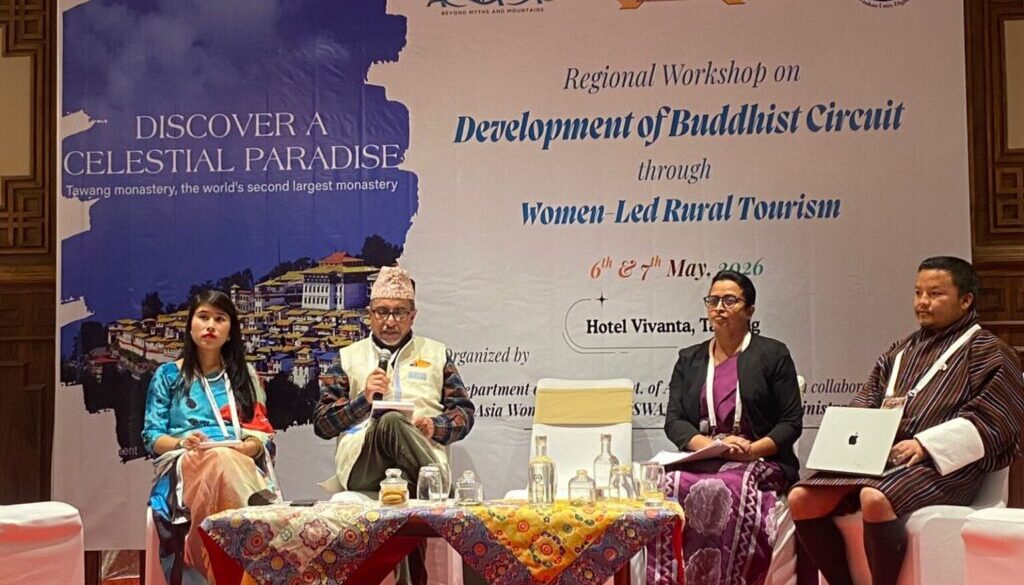
Kathmandu, May 8: A regional workshop aimed at developing an integrated Buddhist Circuit across South Asia concluded in Tawang, Arunachal Pradesh, on May 7, bringing together delegates from Nepal, Bhutan, Sri Lanka and India.
The two-day workshop, held from May 6 to 7, focused on promoting a women-led rural tourism model for sustainable and inclusive tourism development. The event was organised by the Department of Tourism of the Government of Arunachal Pradesh in collaboration with the South Asian Women’s Network (SWAN) and the Tawang District Administration.
The programme was inaugurated in the presence of Arunachal Pradesh Deputy Chief Minister Chowna Mein and Minister for Women and Child Development, Science and Technology, and Cultural Affairs Dasanglu Pul. Policymakers, tourism experts, women leaders and tourism stakeholders participated in discussions on regional tourism cooperation, Buddhist heritage promotion and women-led tourism initiatives.
During the workshop, participants stressed the importance of strengthening connections among major Buddhist heritage sites across South Asia and promoting the region as a unified spiritual and cultural tourism destination.
A major focus of the discussions was women-led rural tourism. Delegates highlighted the role of women as eco-guides, entrepreneurs, cultural interpreters and conservation leaders. According to participants, the model could help create sustainable livelihoods while preserving local culture, traditions and ecosystems.
The workshop also identified challenges related to cross-border connectivity, including travel logistics, infrastructure gaps and regulatory frameworks. Delegates said improving seamless travel between Buddhist destinations would be essential for the success of the regional circuit.
Participants further emphasised the need for sustainable tourism standards, coordinated regional branding and joint promotional campaigns to strengthen the Buddhist Circuit internationally. Festivals such as Buddha Jayanti and monastic celebrations were also identified as key attractions for cultural tourism.
The Nepal delegation was led by Bagmati Province Member of Parliament and former Tourism Minister Yankila Sherpa. The team included representatives from the Nepal Tourism Board, the International Development Institute, T-Help, Bar Pipal Bisauni Homestay and Impact Adventure.
The Nepal delegation highlighted Buddhist heritage sites in Nepal, women-led rural tourism initiatives and the importance of improving connectivity, standardization and marketing of the Buddhist Circuit.
Srijana Nepali, senior officer at the Nepal Tourism Board, delivered a presentation on branding and marketing of the Buddhist Circuit. She highlighted Nepal’s efforts to promote Buddhist tourism through strategic branding, integrated promotional campaigns and stakeholder collaboration aimed at strengthening Nepal’s identity as a leading spiritual tourism destination.